4. MAC – burned into the NIC, never leaves the LAN
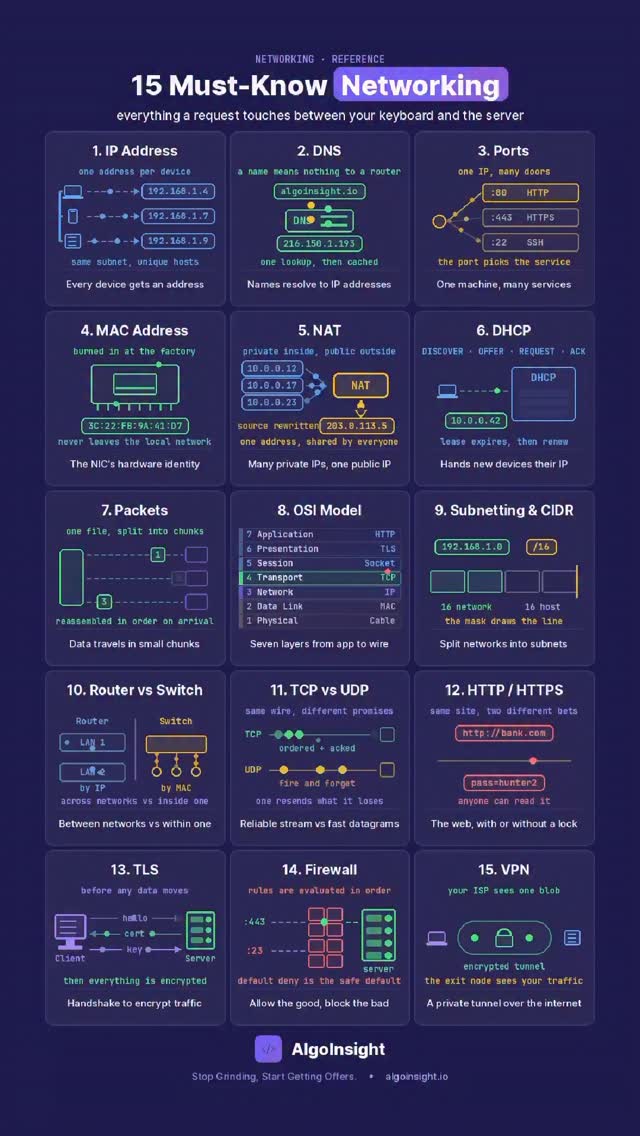
4. MACアドレス – NICに焼き付けられ、LANから出ることはない
5.NAT
5. NAT – many private IPs, one public
5. NAT – 多数のプライベートIPアドレスと1つのパブリックIPアドレス
6.DHCP
6. DHCP – DISCOVER, OFFER, REQUEST, ACK
6. DHCP – DISCOVER、OFFER、REQUEST、ACK
7.Packets
7. Packets – split up, reassembled in order
7. パケット – 分割され、順番に再構成される
8.OSI Model
8. OSI Model – 7 layers, app down to cable
8. OSIモデル – 7層、アプリケーションからケーブルまで
9.Subnetting & CIDR
9. Subnetting – the mask splits network from host
9. サブネット化 – マスクによってネットワークとホストが分離される
10.Router vs Switch
10. Router vs Switch – by IP vs by MAC
10. ルーターとスイッチ – IPアドレス によるかMACアドレスによるか
11.TCP vs UDP
11. TCP vs UDP – acked stream vs fire and forget
11. TCPとUDP – ACK付きストリームか、送信して忘れる方式か
12.HTTP /HTTPS
12. HTTP vs HTTPS – with or without a lock
12. HTTPとHTTPS – ロックの有無
13.TLS
13. TLS – hello, cert, key, THEN data
13. TLS – hello、cert、key、そしてデータ
14.Firewall
14. Firewall – rules in order, default deny
14. ファイアウォール – ルールは順番に、デフォルトは拒否
15.VPN
15. VPN – a tunnel (the exit node still sees you)
15. VPN – トンネル (出口ノードは依然としてあなたを認識している)
2.解説
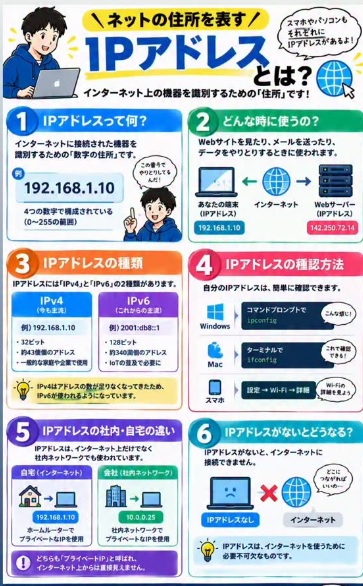
1. IP vs MAC is the most confused pair in networking. IP says WHERE you are on the internet. MAC says WHICH physical card you are on this cable. IP is routable and changes as you move networks. MAC is fixed and never crosses a router. Every packet carries both – and the MAC is rewritten at every hop while the IP stays put. Get that and routers, switches, ARP and traceroute all click at once.
用語の解説 IP はインターネット上のどこにいるかを示す MAC はこのケーブル上のどの物理カードであるかを示す
IP はルーティング可能で、ネットワークを移動すると変わる MAC は固定されており、ルーターを通過することはない
全てのパケットには両方が含まれており、 MAC はホップごとに書き換えられる IP はそのままで書き換えられない
2. Most of this list is caching or translation in disguise. DNS caches name to IP. ARP caches IP to MAC. NAT translates and keeps a table to translate replies back. DHCP leases and remembers. 15 items, 3 ideas.
リストのほとんどは、偽装されたキャッシュまたは変換 DNS は名前を IP にキャッシュする ARP は IP を MAC にキャッシュdする NAT は変換し、返信を変換するためのテーブルを保持する DHCP はリースして記憶する
3. The security ones work at DIFFERENT layers – that’s why you need several. A firewall filters ports and addresses. TLS encrypts payloads. A VPN wraps the lot. None replaces the others: a firewall can’t see inside TLS, TLS doesn’t hide WHO you’re talking to, and a VPN just moves the trust boundary to whoever runs the exit node.